Review: Beautiful Hibiscus ITH Key Fob Pattern
As an embroidery designer who has spent years digitizing and testing files for commercial use, I approach every new machine embroidery design with a critical eye. It is not enough for a pattern to look pretty on a screen; it must perform under the needle, withstand washing, and elevate the brand identity of the business using it. Recently, I evaluated the Beautiful Hibiscus ITH Key Fob Pattern to determine its viability for small business merchandise, branded patches, and boutique add-ons. This review focuses on how this specific embroidery file functions in real-world production environments, from busy coffee shops to high-end floral boutiques.
First Impressions and Visual Personality
The first thing that strikes you about the Beautiful Hibiscus ITH Key Fob Pattern is its versatility within the Single Flowers Plants category. Hibiscus blooms are inherently tropical, bold, and welcoming. In a business context, this translates to a brand personality that is friendly, organic, and approachable. Unlike rigid geometric logos, a floral motif softens the visual impact of corporate branding, making it ideal for businesses that want to project warmth and care.
The design feels decorative yet structured. For an Embroidery project, the balance between fill stitches and outline details is crucial. From a designer’s perspective, this pattern appears to offer a clean aesthetic that avoids the clutter often found in lower-quality digital files. It suggests a premium, handmade quality that can significantly enhance the perceived value of a finished product. Whether used on a rustic tote bag or a sleek uniform apron, the hibiscus motif brings a touch of elegance without overwhelming the substrate.
Versatility in Small Business Merchandise
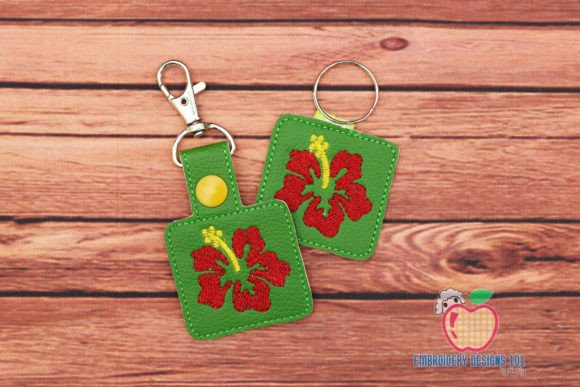
The true strength of the Beautiful Hibiscus ITH Key Fob Pattern lies in its format. As an In The Hoop (ITH) design, it includes three distinct versions: Snap Tab, Eyelet, and Ribbon. This variety is a massive asset for small business merch creators. Let us break down how each version serves different commercial needs.
- Snap Tab Version: This is perfect for creating durable, detachable accessories. Imagine a local bakery selling these as impulse buy items at the counter. They serve as functional key fobs but also act as mobile advertisements for the brand.
- Eyelet Version: Ideal for luggage tags or gift card holders. For Etsy sellers, this adds a layer of professionalism to packaging, turning a simple transaction into a memorable unboxing experience.
- Ribbon Version: This offers a softer, more traditional look, suitable for hanging ornaments or decorative pulls on zipper bags.
Beyond the key fob application, the core hibiscus motif can be extracted or utilized as a standalone embroidered patch. For apparel decorators, this design works exceptionally well as a chest logo accent on staff uniforms. A florist, for instance, could embroider this hibiscus on the left chest of their delivery drivers’ polo shirts. It reinforces brand recognition while maintaining a clean, professional silhouette. Similarly, for cap embroidery, the compact nature of the design ensures it fits neatly on the front panel without distorting the curve of the hat.
Technical Performance and Hoop Compatibility
From a technical standpoint, the description notes that each design is 4x4 hoop friendly, or compatible with 5x7 hoops if available. This is a critical detail for production efficiency. The 4x4 hoop size is the workhorse of the embroidery industry, meaning most small business owners already have the necessary equipment to run this file without investing in larger machines. This accessibility lowers the barrier to entry for crafters and startup brands.
However, when integrating this into custom apparel or larger items like tote bag design projects, scale matters. While the ITH function is designed for small accessories, using the hibiscus element as a larger print requires checking the stitch density. High stitch density on large areas can lead to fabric puckering, especially on lighter materials. I recommend running test stitches on scrap fabric identical to your final product to ensure the tension is correct. Always use the appropriate stabilizer; for stretchy fabrics like jersey tees, a cut-away stabilizer is non-negotiable to maintain the integrity of the flower shape after washing.
Strategic Branding and Customer Trust
Why choose a floral design over a text-only logo? The answer lies in emotional connection. The Beautiful Hibiscus ITH Key Fob Pattern helps build brand identity by associating the business with natural beauty and craftsmanship. In industries like hospitality, wellness, or retail, customers are drawn to tactile, high-quality touches. An embroidered item feels substantial and valuable compared to a printed vinyl sticker.
When used as a branded product add-on, such as a free gift with purchase, this key fob increases customer loyalty. It transforms a standard transaction into a relationship-building moment. For handmade brands, consistency is key. Using this design across various touchpoints—aprons, packaging tags, and staff wear—creates a cohesive visual language. This consistency builds trust, signaling to the buyer that the business pays attention to detail.
Design Limitations and Careful Application
While versatile, this design requires careful handling in certain scenarios. Embroidery on dark uniforms can be tricky if the thread colors do not have sufficient contrast. If your brand colors are dark, consider using metallic or bright threads to make the hibiscus pop. Additionally, textured fabrics like heavy canvas or terry cloth can obscure fine details. In these cases, simplify the thread palette and ensure the fabric texture does not interfere with the stitch definition.
Another consideration is the size. Since this is optimized for 4x4 hoops, it is not suitable for large back prints on jackets. Attempting to enlarge it beyond its intended dimensions may result in pixelation or poor stitch quality. Always respect the original digitizing limits. For commercial embroidery projects involving frequent washing, such as restaurant aprons, ensure that the thread type is rayon or polyester rated for industrial laundering to prevent fading or fraying.
Practical Designer Notes for Production
Before launching this design into your product line, follow these practical steps to ensure a professional finished product:
- Test in Monochrome: Stitch the design out in black and white first. This helps you evaluate the shape and density without the distraction of color. If it looks good in monochrome, it will look great in color.
- Check Commercial Licensing: Always confirm the license terms of the digital embroidery file. Ensure you have the right to sell physical items made with this design, especially if you are producing in bulk.
- Create Printable Mockups: Before stitching on expensive garments, use a printable mockup to visualize how the hibiscus looks on different colored fabrics. This saves time and material costs during the design phase.
- Compare Design Assets: Place this pattern beside your existing logo and fonts. Does it complement your current design assets? Visual harmony is essential for a polished brand presentation.
- Inspect Spacing and Density: Look closely at the stitch spacing. Are there any long jumps that might need tacking down? Is the density too high for your specific fabric? Adjust your stabilizer choice accordingly.
In conclusion, the Beautiful Hibiscus ITH Key Fob Pattern is a robust tool for small business owners and embroidery professionals. It bridges the gap between functional accessory and brand ambassador. By understanding its technical constraints and leveraging its aesthetic appeal, you can create high-value merchandise that resonates with customers. Whether you are decorating caps, creating unique gifts, or enhancing staff uniforms, this design offers a blend of beauty and practicality that supports sustainable business growth.